 CALL US NOW

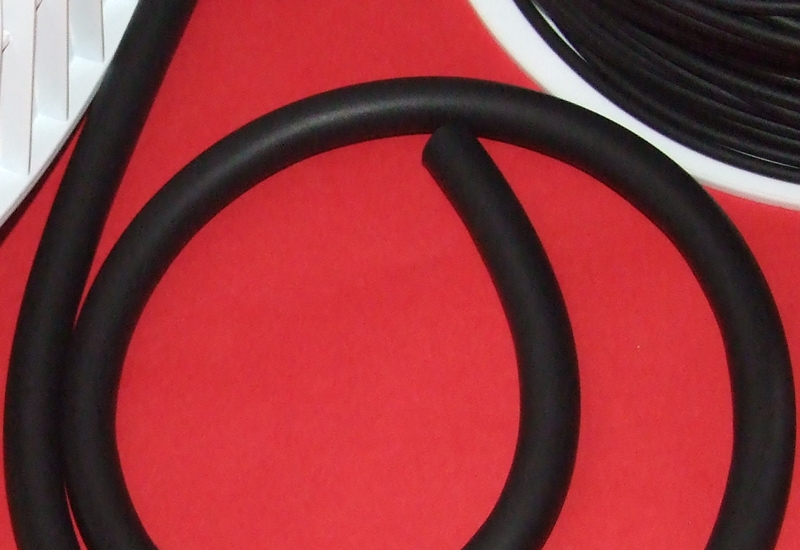
6mm Black Neoprene Sponge Rubber Cord
| Our Stock No. COR6 |
Our 6mm Neoprene Sponge Cord is a resilient, medium-to-large elastomeric sealing cord designed for applications requiring higher compression displacement and deeper gap filling.
Engineered from premium closed-cell neoprene rubber, it creates a flexible, airtight, and watertight barrier that excels in harsh outdoor environments, marine applications, and vehicle bodywork.
All Prices Include FREE Standard UK Delivery and VAT on all orders. To upgrade to a faster service please see our Delivery Info Page.
We can supply in continuous lengths up to 50m. For total lengths of more than 100 metres of this size please email/ring us for stock levels.
PVC Tube Online Ltd - The Rubber specialists - over 15 years of proven track record and safety.
Purchase Neoprene Rubber Sponge Cord 6mm:
Neoprene Sponge Cord 6mm
Product Overview:
The 6mm diameter sits at the sweet spot between standard residential weatherstripping and heavy industrial Gasketing.
It is widely specified by campervan converters, commercial fleet maintainers, boat builders, and glazing contractors who need dependable sealing across slightly wider or uneven channels.
Rubber Cord can be stuck together with a drop of cyanoacrylate (superglue).
Product Data:
- Stock No. : COR6
- Brand: Hobby Warehouse
- Material: Black Neoprene
- Diameter: 6mm +/- 11%
- Bend Radius: 16mm
- Structure: Closed Cell
- Max Temperature: +67° C
- Min Temperature: -18° C
- Compressibility: Up To 73%
- Moisture: Resistant
- Flexibility: Very Good
- Cracking: Resistant
- Ozone/UV: Resistant
6mm Black Neoprene Sponge Rubber Cord Primary Applications & Common Uses:
1. Campervan Conversions, Motorhomes & Commercial Vehicles
• Custom Van Window & Vent Seals: Ideal for sealing around retrofitted side windows, roof vents, and skylights in campervan conversions.
• Camper Locker & Storage Doors: Replaces worn perimeter seals on external locker doors, gas bottle bays, and under-bed storage access hatches to stop rain and road spray.
• Cab Noise & Rattles: Installed behind interior trim panels, door cards, and utility racks to eliminate vibration squeaks and road noise on long hauls.
2. Marine & Boat Maintenance (Medium Duty)
• Deck Hatch & Porthole Gaskets: Creates a robust, watertight seal for mid-sized cabin hatches, anchor lockers, and porthole frames on motorboats, yachts, and canal cruisers.
• Outboard Motor Covers: Used as a flexible perimeter seal under engine cowlings to keep sea spray out of the motor compartment while deadening engine sound (dependant upon temperature).
3. Acoustic Damping, Glazing & Metal Fabrication
• Acoustic Enclosure Sealing: Dampens panel vibration and stops air leakage in high-output speaker cabinets, air compressors, and industrial acoustic shrouds.
• Expansion Joint Packing in Glazing: Fits into expansion channels within aluminium glazing frames, conservatory structural roof joints, and metal curtain walling.
• Generator & Plant Housings: Provides dust-proof and rainproof perimeter sealing on portable generator enclosures and outdoor pump housings.
Sizing & Channel Fitting Guide
• Recommended Groove Width: Performs best in channel recessed widths of 4.8mm to 5.5mm, allowing the 6mm cord to seat cleanly and compress between 20% to 30% for an optimal watertight seal.
• Need a Slightly Slimmer Profile? For standard UPVC window grooves, classic car trim, or narrower electrical panel channels, check out our [5mm Neoprene Cord].
• Need a Heavy-Duty Industrial Seal? For main boat hatches, commercial boot lids, or heavy machinery access doors, explore our [8mm Neoprene Cord] or [10mm Neoprene Cord].
Frequently Asked Questions (FAQ)
Q: Why choose 6mm over 5mm for a vehicle or van conversion?
A: The 6mm cord offers extra compression height. If your channel is slightly worn, irregular, or subject to vehicle flex while driving, 6mm ensures continuous contact where a 5mm cord might leave small air gaps.
Q: Can 6mm neoprene cord be bent around tight corners?
A: Yes. Closed-cell neoprene sponge is extremely flexible. It bends easily around radius corners in window channels and hatch frames without kinking or buckling.
Q: How do I cut and join the ends for a continuous loop seal?
A: Simply cut the cord cleanly at a 90° angle (or 45° mitre for corners) using a sharp craft knife, then join the ends using a drop of cyanoacrylate (superglue). The bond forms in seconds and remains flexible.
• Fast UK Dispatch: Standard diameters held in stock for rapid delivery.
(Always consider temperature limitations. It is the customers responsibility to ensure suitability and safety of use - Please contact us in your are unsure).